Kickstarter backers pumped roughly $220 million into tabletop projects in 2024. Gamefound pulled in another $85 million, and six of the top ten most-funded campaigns ran on its platform instead. BackerKit, the smaller of the three, hosted the year's standout tabletop role-playing projects. Three platforms now matter for board game creators, and they don't compete on the same terms. The old playbook — pick Kickstarter, raise the money, ship — doesn't fit the current landscape. The platform you pick decides who finds your game, what fees come out of your raise, and how much of your audience sticks around for the next campaign.
TL;DR Quick Answers
Board game crowdfunding strategy
A board game crowdfunding strategy is the full plan a creator runs before, during, and after a campaign, not just the platform choice. Strong strategies treat the campaign as small-business funding, start at least six months before launch day, and prioritize audience building above platform selection.
Build a pre-launch email list before campaign day one. A larger list produces a higher day-one conversion rate, which signals platform algorithms to surface the project.
Match the platform to the game type: Gamefound for heavy strategy and miniatures projects, Kickstarter for broad-appeal first campaigns, BackerKit for tabletop RPGs and AI-art-free identities.
Lock pledge tiers, stretch goals, and shipping math before the campaign goes live, not during the funding period.
Plan a paid acquisition budget for ads, content, and influencer reach. Most successful tabletop campaigns reinvest a meaningful share of their raise into marketing.
Run a pledge manager after the campaign closes to capture late pledges and add-on revenue.
Top Takeaways
The most important conclusions from the platform comparison:
Kickstarter leads on volume for board game and tabletop crowdfunding, with the largest backer audience and the highest all-time funded tabletop campaign at $15.1 million.
Gamefound runs the specialist platform built around the tabletop community, and it now hosts the majority of the most-funded tabletop campaigns each year.
BackerKit raises less total tabletop money than the other two, but it dominates TTRPG launches and attracts creators who value its AI-art ban.
All three platforms use all-or-nothing funding and charge roughly 5% in platform fees plus 3 to 5% in payment processing.
The platform decision sits inside a larger marketing plan. Rushing the launch usually costs more than it earns.
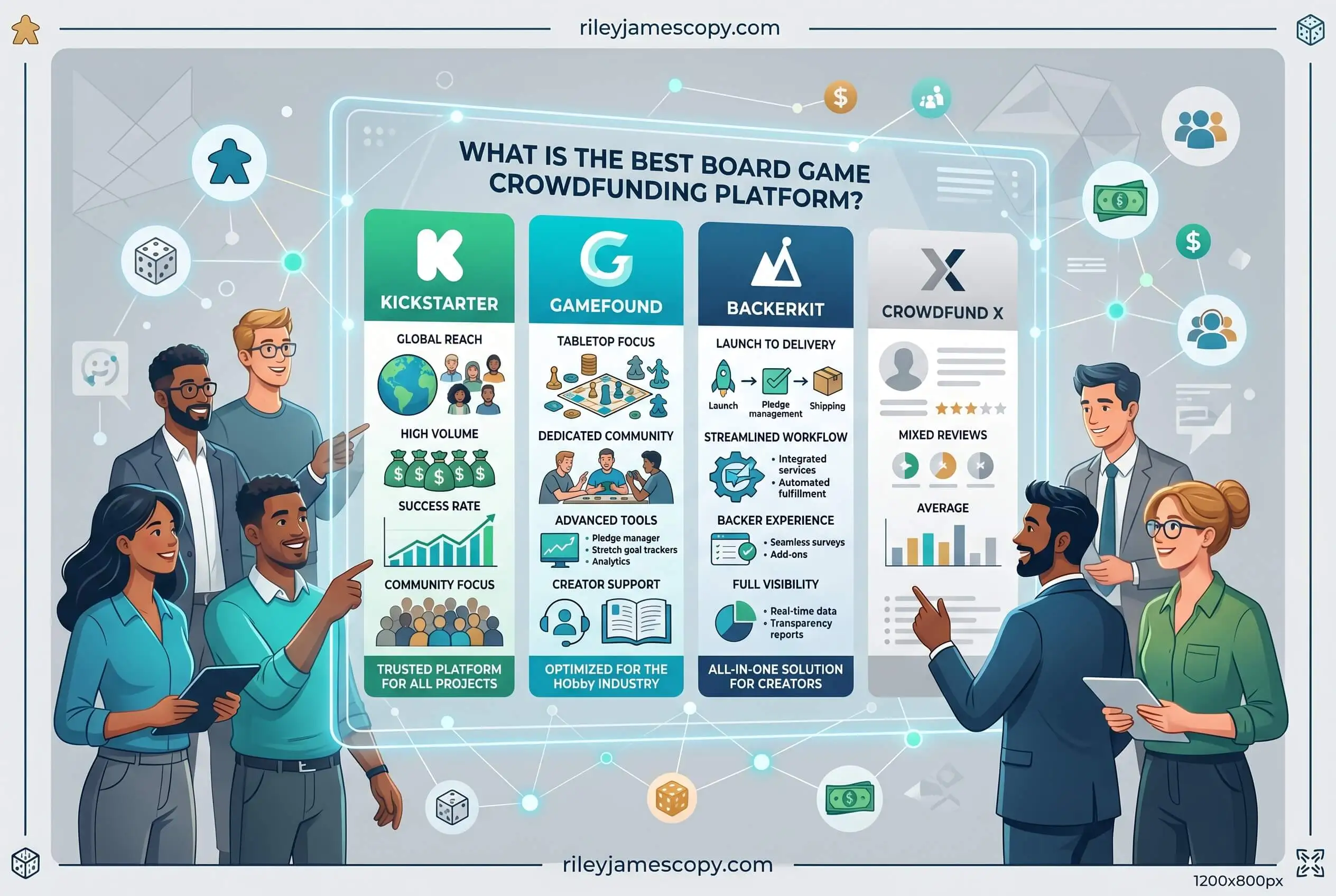
Kickstarter: The Volume Leader
Kickstarter has been the default crowdfunding home for tabletop creators since 2009. The numbers from 2024 prove the platform still owns the category by sheer volume: 6,646 board game and tabletop campaigns launched, 5,314 funded, $220 million pledged. That 80% success rate is the highest in the platform's fifteen-year history. Kickstarter also holds the all-time record for the highest-funded tabletop campaign, the Cosmere RPG from Brotherwise Games at $15.1 million.
Reach is the reason most creators still default to Kickstarter. The site's discovery traffic finds backers that no first-time creator could turn up through their own social channels. There's a catch, though. The average successful tabletop campaign on Kickstarter raises around $41,400. Headline winners get huge. The median creator walks away with a modest raise.
Kickstarter fits broad-appeal games, first campaigns, and creators who don't yet have a deep pre-launch audience and need platform discovery to help fill the gap.
Gamefound: The Tabletop Specialist
Gamefound started as a pledge manager and grew into a full crowdfunding platform built specifically for tabletop. That tighter focus is reshaping the category. Gamefound campaigns raised about $85 million in initial funding in 2024, a 49% jump over the prior year. Add pledge manager activity and the platform's total dollars handled hit roughly $156 million.
The number that turns publishers' heads is the average raise. Gamefound campaigns averaged around $395,000, nearly ten times Kickstarter's tabletop average. Six of the ten highest-funded tabletop campaigns of 2024 launched on Gamefound, including the Cyberpunk 2077 board game at $7.6 million and Lands of Evershade at $7.4 million.
The platform suits heavy strategy games, miniatures-driven projects, and publishers who already have an audience. Discovery is the trade-off. Gamefound's overall traffic runs smaller than Kickstarter's, which means creators need to bring most of their own backers. Publishers who've already built an email list and a social following see Gamefound reward that work generously.
BackerKit Crowdfunding: The TTRPG Favorite
BackerKit ran the pledge manager that countless Kickstarter and Gamefound projects already used for fulfillment, then launched its own crowdfunding marketplace in 2022. The platform raised about $23.1 million in tabletop funding in 2024. That number sits well below the other two, but BackerKit punches above its weight in tabletop role-playing games.
Three of the top ten crowdfunded TTRPGs of 2025 launched on BackerKit, including Monte Cook Games' Cypher System project. The platform also took a public stance against AI-generated artwork in 2023 by banning campaigns that rely on it. That position resonates with much of the TTRPG and indie tabletop community, and it's brought a steady flow of creators who want that line drawn clearly.
TTRPG creators tend to land at BackerKit. It also fits projects that want unified crowdfunding and fulfillment in one tool, or creators who treat the no-AI-art policy as part of their brand identity and broader DnD and TTRPG marketing approach.
How to Pick
The cleanest decision sequence is game type first, audience size second, tooling preference third. A heavy strategy game with miniatures and an existing audience usually belongs on Gamefound. Broad-appeal board games without an established backer base typically do better starting on Kickstarter. For tabletop RPG creators, and for anyone who values BackerKit's AI-art ban, BackerKit is the right call. Fees barely enter the equation since all three platforms charge roughly 5% on funds raised plus 3 to 5% in payment processing. Platform fit decides the outcome.
“The platforms' core mechanics haven't changed much in the past two years, but the competition between them absolutely has. Gamefound CEO Marcin Świerkot told BoardGameWire in February 2025 that his company's goal for the year was to overtake Kickstarter in tabletop funding outright, calling that target "extremely ambitious and yet achievable." From a small-business funding angle, that kind of fight benefits creators. When platforms compete for top campaigns, fees stay competitive and features keep improving, which is why many top marketing agencies now pay close attention to how each platform evolves before advising clients where to launch. The publishers who win in this environment study the landscape carefully before they commit.”
7 Essential Resources
The links below cover the research most creators end up needing before they pick a platform:
Kickstarter Creator Handbook for the platform's own pre-launch guidance and project setup walkthroughs.
Gamefound for browsing live and upcoming tabletop campaigns to study what's working in your category.
BackerKit Help Center for crowdfunding and pledge-manager documentation from the platform itself.
BoardGameGeek for community feedback, ratings, and the deepest pre-launch audience research database in the hobby.
Tabletop Analytics for live crowdfunding campaign data across Kickstarter, Gamefound, and BackerKit.
BoardGameWire for industry news, platform reporting, and creator interviews.
Dicebreaker for tabletop industry coverage and ongoing platform comparison reporting.
3 Statistics
Three numbers explain most of the platform decision for board game creators:
$220 million raised across 5,314 funded Kickstarter tabletop campaigns in 2024. That's an 80% success rate, the highest in the platform's fifteen-year history. (Source: Kickstarter 2024 results)
Gamefound campaigns averaged roughly $395,000 raised vs. Kickstarter's $41,400 tabletop average. Platform fit drives raise size more than any other factor. (Source: LaunchBoom 2024 platform comparison)
Six of the ten most-funded tabletop crowdfunding campaigns of 2024 launched on Gamefound, including the $7.6 million Cyberpunk 2077 board game. (Source: BoardGameWire, February 2025)
Final Thoughts and Opinion
The best board game crowdfunding platform depends on what you actually need it to do. Kickstarter remains the safer starting point for most first-time creators because of its backer audience. If your project leans heavy on strategy or miniatures and you've already built a list, Gamefound is the harder pick to argue against. TTRPG creators have an obvious home on BackerKit, and the AI-art ban has only sharpened that audience's loyalty.
Here's the opinion worth offering. The board game crowdfunding strategy that actually delivers in 2026 starts months before the platform decision matters. Build the audience first. The platform choice gets much easier once you know who's going to back you, what they're willing to pay, and which features will keep them backing your next campaign too.
Frequently Asked Questions
Which crowdfunding platform is best for board games?
Gamefound usually wins for board game creators who already have an audience, since its average campaign raises about ten times what Kickstarter's tabletop average produces. First-time creators without an established audience tend to do better on Kickstarter, where platform discovery helps fill in the gaps. BackerKit remains the strongest option for tabletop role-playing games and community-driven projects inspired by social tabletop successes like the Hues and Cues game.
Is Gamefound better than Kickstarter for tabletop?
It depends on what you're measuring. Gamefound delivers a much higher average raise per campaign and hosts most of the top-ten tabletop projects each year. Kickstarter still has the larger backer audience and stronger organic discovery, which makes it the safer choice for first-time creators without an established email list.
How much does it cost to launch a board game on a crowdfunding platform?
Platform fees run roughly 5% of funds raised across Kickstarter, Gamefound, and BackerKit, with another 3 to 5% in payment processing on top. Those fees come out of what you raise, not upfront. Manufacturing, fulfillment, and marketing are the bigger costs to plan for.
What is the success rate of board game crowdfunding?
Kickstarter reported an 80% success rate for tabletop campaigns in 2024, the highest in the platform's history. That number only counts campaigns that are funded, not campaigns that delivered a profitable outcome for the creator. Hitting the minimum funding goal and running a profitable project are two different goals.
How long should you prepare before launching a crowdfunding campaign?
Six months of pre-launch preparation is the standard recommendation among experienced tabletop crowdfunding marketers. That window covers audience building, content production, influencer outreach, and email list growth. Campaigns rushed in two or three months can still fund, but they usually spend more on marketing than they generate.
CTA
The platform decision is one piece of a much bigger picture, and most of the real work happens long before a campaign goes live. Browse the rest of the site for more on building a brand, developing a long-term brand extension strategy, structuring a small business launch, and running campaigns that actually convert.